

The United States has raised the alarm over alleged attempts by Mexican drug cartels to turn Nigeria into a major manufacturing hub for methamphetamine, warning that criminal networks may be seeking alternative routes to international markets.
The warning followed a series of operations by the National Drug Law Enforcement Agency (NDLEA), which dismantled four clandestine methamphetamine laboratories across Nigeria this year.
US Deputy Assistant Secretary of State for International Narcotics and Law Enforcement Affairs for Africa and the Middle East, Michael Gonzales, raised the concerns on Tuesday during a visit to the NDLEA headquarters in Abuja.
Gonzales commended the agency for its counter-narcotics operations, describing Nigeria as strategically important to international efforts to combat drug trafficking.
According to him, increasing pressure on drug cartels operating in the Western Hemisphere is forcing criminal networks to explore alternative routes through Africa to reach markets in Europe and other parts of the world.
He likened the development to squeezing a balloon, explaining that intensified enforcement in one region could push traffickers to seek opportunities elsewhere.
The NDLEA Chairman, Brig. Gen. Mohamed Buba Marwa (retd.), said the agency’s investigations had uncovered what he described as a deliberate attempt by Mexican cartels to establish Nigeria as a methamphetamine manufacturing base.
Marwa disclosed that operatives had dismantled what the agency described as Nigeria’s largest clandestine methamphetamine laboratory in a forest in Ijebu East Local Government Area of Ogun State.
During the operation in May, three Mexican nationals and Nigerian collaborators were arrested, while illicit substances and chemicals valued at more than $360 million were reportedly recovered.
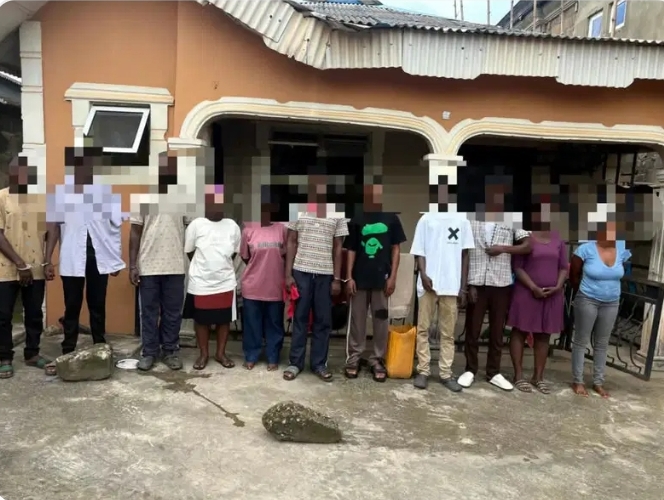
Barely four weeks later, the agency raided another industrial-scale laboratory in Tapa village, Oyo State, arresting a Mexican national allegedly brought into Nigeria to oversee large-scale methamphetamine production alongside four Nigerian collaborators.
Marwa said similar facilities linked to the alleged network had subsequently been uncovered in Enugu and Ebonyi states.
According to him, the discoveries indicate that the suspected criminal networks may be seeking to establish Nigeria as a production centre for methamphetamine intended for international distribution.
He warned that the operations were not designed solely to supply the Nigerian market, but could also support the movement of large quantities of the drug through West Africa to Europe, Asia and the United States.
The NDLEA chairman said the development underscored the need for stronger international cooperation against drug trafficking, particularly as criminal organisations increasingly operate across national borders.
He also highlighted the links between illicit drug trafficking, illegal arms trading and terrorism financing, warning that the proceeds of organised crime could strengthen armed groups operating in vulnerable regions.
Marwa urged the United States to sustain and potentially increase its support for Nigeria’s counter-narcotics campaign, particularly in forensic analysis, intelligence gathering, investigative training and the tracking of illicit financial flows.
The latest warning comes amid a series of investigations into suspected Nigerian-Mexican drug networks and clandestine methamphetamine production facilities discovered across the country.
The NDLEA has maintained that its operations are aimed at preventing Nigeria from becoming a safe haven for international drug cartels.